

What is a Marketing Funnel?
by Keith Haynes • in Digital Marketing • Posted on 13 Jun, 2023
The internet of today is vast and vibrant. There is a plethora of content, services, apps, websites, and even search engines - if you can name it, odds are it is online. The challenge when creating your content or service and sending it into the vastness of the world wide web is that there is a ton of competing services and similar content. Imagine setting up a food stall in a bustling market - to attract potential buyers you may set up attractive signs, waft the enticing scents of foods, or even employ someone to stand near your stall and announce the presence of your little business. In the scenario of a market, these things might actually work. The behaviour patterns of people dictate that they may follow the path or flow of traffic in the marketplace. The trick is attracting their attention while they walk past. In a digital space - things aren’t so simple. You are not competing with 50 stalls - you are competing with the world. So what are your options?
Online, we need to get eyes on whatever it is that we’re selling. We need to cast as wide a net as possible to attract as many potential consumers as is feasible. Think of this as getting those consumers to make the trip from their homes to the market where your stall is standing. Through a series of steps, we slowly channel online traffic towards our business and then towards engaging with our platform with the intent of making purchases. This is where funnels come in. These marketing strategies can have monumental outcomes on the sustained longevity of your company. You can’t rely on word-of-mouth alone in today’s day and age.
The four stages of a marketing funnel
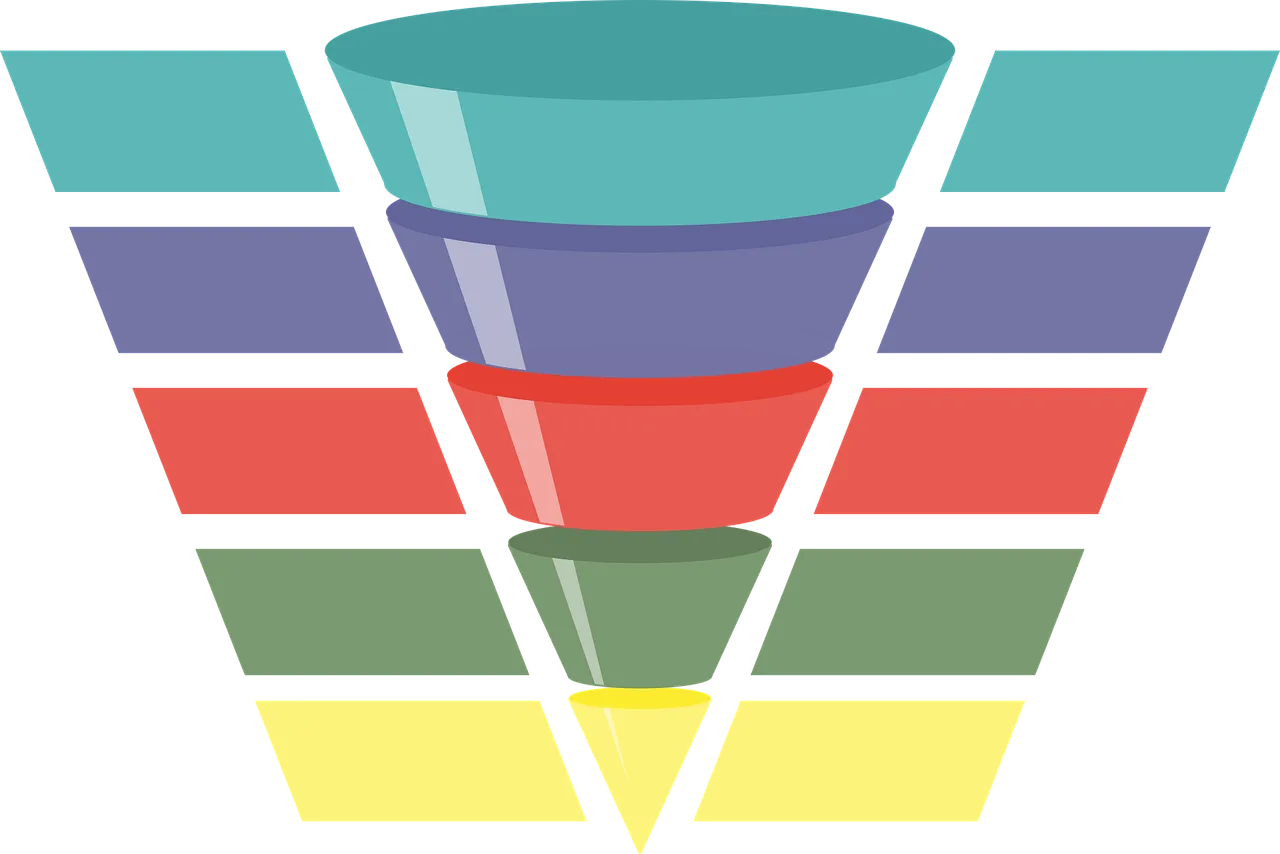
Russell Brunson speaks of a value ladder and the marketing funnel mirrors this ladder very well. The first level of the value ladder is the “bait” and your lead generation (in the image above) is the same thing. By successfully executing lead generation, you create content or distil information that is useful to potential clients and customers. This also establishes your business in the industry and makes you more reputable. We’re all strangers online, after all, so we need to show people that we’re to be trusted. This can be in the form of a website or even a social media page. You share information and people consume it, free of charge, with the hopes that they will come back later for more. Over time, the customer develops a relationship with you or your company and will be channelled further down the funnel.
On the next level, you begin to market your service or your product to consumers, establishing they have something they need or want, and you can supply it. By avoiding common digital marketing mistakes and offering things like free trials or flash sales, you can get them to try some of your services and solidify their need for your product. At the end of the day, what your business gets from this transaction is their contact details. Whether it’s in the form of an account on your website, their email, or even their phone number - you now have the opportunity to make a happy consumer a repeat customer. This repeat cycle ultimately translates to your customer reaching the bottom of the marketing funnel where you enjoy increased sales and revenue. All of this sounds rather simple and intuitive, and to an extent it can be, but a deeper look into what’s happening under the hood will add a lot more context.
We’ve already established that having a website is a vital part of your marketing funnel. Within a website, a landing page is key to retaining consumers and establishing your reputation. Here you can carefully cater your site to your specific needs, engage with your customer, and inspire a Call To Action (CTA). This is what your customers, clients, or consumers will see first. You are trying to elicit a response here - “we have a product, you have a need”.
What follows is the tricky scenario of Lead Capture. For Lead Capture you can hire third parties or dig into solving this yourself. At the end of the day what you’ll need to accomplish is getting your visitors to sign up for something, giving you their names or emails in return. It’s entirely up to you how sophisticated you want to make this process. With the right tools in place, you can track page visits, log what people are most interested in, and even determine the likelihood that they will turn into paying consumers.
Now that you’ve set up the optimum landing page, you have to attract attention towards it. This can be accomplished with email marketing campaigns, advertisements around the web, social media posts, or good old organic searches. Facebook, YouTube, Instagram, Twitter, and TikTok can all channel people to your website and landing page. By embedding analytics into your website links, you can keep track of which consumers are coming from where, using services such as Google Analytics. Analytics can tell you valuable things like:
User’s session duration
How many visitors you have for a given period
Where your users are coming from
Which links people used to get to your site
Which social networks get you the most views/page visits
How many page views you get
What your conversion rates are
If people are following the same hashtags you’re posting to, then they’re already interested in some things you may supply. Search Engine Optimisation (SEO) allows your landing page to pop up when people query things related to your industry or service. The key thing here is that you’re not attracting just anyone - you’re attracting the people most likely to hang around, make an account, and eventually buy something. This type of interaction on your site is invaluable, and you can enjoy the benefits of it with simple, well placed tweaks.
By implementing marketing strategies like weekly newsletters and emails covering products or services your base are interested in, customers can return to your site for more services or information in future. By doing this, you are keeping your funnel healthy and avoiding stagnation which can ensure that your site continues healthy growth for the foreseeable future.
Incorporating these four stages in your online marketing strategy means that successful results are inevitable. It requires effort and forethought, but allows for crucial sustainability in today’s economy. In niche industries and services, your business can quickly dominate its target demographic, not only becoming successful - but reputable in a time where online presence and perception is vital.
Comment 0 Comments
Have a question about this article? Get in touch with our team.